


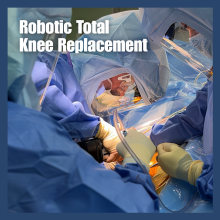
Robotic Total Knee Replacement Walk-Through with Cory Calendine, MD, Orthopedic Surgeon
Mako robotic-assisted surgery is a technology developed for knee replacement surgeries. MAKO robotics allows your orthopedic surgeon to pre-plan your surgery using MAKO’s software and complete the joint replacement operation by guiding the robotic arm to precisely remove bone and cartilage.
Why is Robotics used for Knee Replacement?
MAKO Robotics technology uses a preoperative CT scan to create a 3D virtual model of your knee’s unique, individual anatomy. This individualized, detailed 3D view allows your surgeon to create a surgical plan optimal for your joint.
In addition, when your surgeon prepares the bone for the implant, the robotic arm guides the surgeon within the predefined area, allowing for a more accurate and better-positioned knee replacement.
What does Robotic-Assisted Knee Replacement Involve?
Your surgeon will use MAKO to make a 3D virtual model of your knee. He or she will then virtually put the implant in place, and once it’s in the proper position, this plan can be implemented during surgery.
While under general or regional anesthesia, MAKO’s robot arm, along with the doctor, will hold the surgical instrument. Your surgeon will be able to see the pre-surgical plan overlaid on your real-time anatomy to utilize as a guide with the surgical instruments under your surgeon's control the entire time.
The robotic instrument has tracking eyes and can adjust for very small movements of the knee. The MAKO robotic arm precisely prepares the bone according to visual boundaries that protect the essential structure of the knee and removes only the part that’s been affected. The new knee implant is placed, the joint is properly balanced, and if necessary, your surgeon can make intraoperative adjustments as needed.
What are the Benefits of MAKO Robotic-Assisted Surgery?
MAKO robotic-assisted joint replacement technology can provide the following benefits:
- Used for partial or total knee replacements
- Creates a personalized surgical plan
- Provides surgeon real-time sensory feedback
- Leaves your surgeon in complete control
- Ensures proper bone preparation
- Allows precise implant placement
- Reduced blood loss and smaller surgical scar
- Helps preserve healthy bone/soft tissue
- Less post-operative pain than manual techniques
- Faster recovery and shorter hospital stay
MAKO Robotic-Assisted Knee Replacement
(WARNING: Graphic surgery video not suitable for sensitive audiences)
What is Robotic-Assisted Joint Replacement Recovery Like?
Recovery is usually quicker than with traditional manual knee replacement methods. Most patients are encouraged to walk just hours after your surgery, and most return to everyday activities within 1-4 weeks. The exact amount of time depends on each patient's health and function prior to surgery.
Who Makes a Good Candidate for MAKO Robotic-Assisted Knee Replacement?
If any of the following apply to you, you may want to speak with a surgeon about this joint replacement technology:
- Progressive knee osteoarthritis
- Decreased mobility or limited daily activity due to joint pain
- Knee pain or stiffness with activity or when getting up from a sitting position
- Inadequate response to non-surgical treatments such as anti-inflammatory medication
If you have pain and stiffness of the knee due to osteoarthritis and want to learn more about joint treatment options and MAKO technology, make an appointment today with Cory Calendine, MD at the Bone and Joint Institute of Tennessee. We’ll devise an effective treatment plan based on your unique circumstances to help provide you with relief and get you moving again.
%20Resurfacing%2C%20CORY%20CALENDINE%2C%20MD.png)
.png)


